
How to Choose the Best Flooring Options for Vancouver Island
Last Updated: October 26, 2026
Quick Summary
The best flooring options for Vancouver Island are those matched to moisture exposure, not showroom looks. Luxury vinyl plank and SPC vinyl suit basements, kitchens and pet-friendly homes, while engineered hardwood offers real wood with coastal stability. Always test subfloor moisture and confirm strata rules before ordering.
Moisture is the deciding factor: rain, salt air and high indoor humidity push every material to its limit.
SPC vinyl's rigid core handles temperature swings better than older flexible vinyl.
Engineered hardwood's cross-layered plywood core resists the warping that affects solid planks.
Solid hardwood and most carpet are poor choices for below-grade rooms over concrete.
Many strata bylaws restrict hard flooring on upper floors and require acoustic underlay ratings.
Table of Contents
Matching Flooring Options to a Coastal Climate
Vinyl Plank Flooring Pros and Cons
Engineered Hardwood Flooring: Stability Where Solid Wood Struggles
Hardwood Flooring Lifespan and What Drives It
Flooring for Concrete Subfloors and Below-Grade Rooms
Comparing Flooring Types Side by Side
Renovation Constraints and Strata Requirements
Ordering Flooring for Your Next Island Project
Frequently Asked Questions
Matching Flooring Options to a Coastal Climate
Choosing the best flooring options for Vancouver Island starts with one reality: moisture is everywhere. Rain, salt air, and high indoor humidity push every material to its limit, and the flooring that survives a dry prairie basement can fail here within a season. The products that last are the ones matched to the subfloor and the room's moisture exposure, not the ones that look best in a showroom.
Flooring choice is really a moisture decision. Get that right and everything else, from durability to maintenance, falls into place. Below, we break down each material honestly, compare them side by side, and flag the installation and strata issues that trip up island projects. To browse the full flooring category and see which materials the supplier offers for a coastal climate, visit our website.
Vinyl Plank Flooring Pros and Cons
Luxury vinyl plank is the most forgiving flooring material for wet, busy homes, and its weaknesses are mostly about feel and resale. The pros are real:
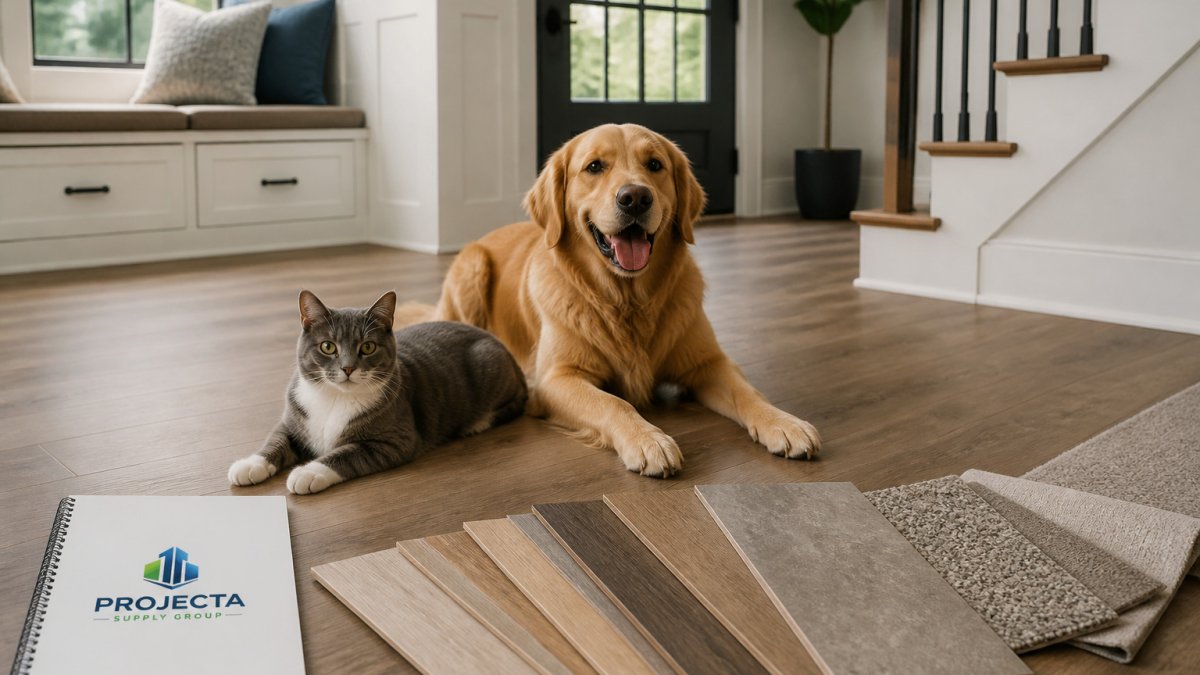
Waterproof cores handle spills, pet accidents, and damp basements
Scratch-resistant wear layers suit high-traffic areas and pets
Warm underfoot compared with tile
Quick click-lock installation cuts labor time
The cons matter too. Luxury vinyl plank can look flat under strong natural light, it doesn't add the resale value of hardwood, and low-quality planks dent under heavy furniture. SPC vinyl, the rigid-core version, holds up better to temperature swings than older flexible vinyl. You can check SPC specs and options on our website before deciding.
If you're weighing vinyl plank against other materials, browse our website to check specs and options before deciding.
Best for: basements, kitchens, rentals, and pet-friendly flooring. Skip if: you want natural wood character or long-term resale value.
Engineered Hardwood Flooring: Stability Where Solid Wood Struggles
Engineered hardwood flooring is real wood on top of a plywood core, and that construction is why it handles coastal humidity far better than solid wood. The cross-layered core resists the expansion and contraction that warps solid planks when indoor moisture swings. You get genuine hardwood underfoot, with far more dimensional stability.
The trade-off is that engineered hardwood can only be refinished a limited number of times, depending on the wear layer thickness. Thicker wear layers cost more but last longer. For island homes with heat and humidity changes, it's the smarter hardwood choice.
See our website for construction details and wear-layer options.
Hardwood Flooring Lifespan and What Drives It
Hardwood flooring lifespan runs from roughly 15 to 30 years for engineered and much longer for solid wood, but three factors decide where you land: moisture control, wear layer, and maintenance. A solid hardwood floor kept at stable indoor humidity and refinished periodically can last decades. The same floor in a damp, poorly ventilated room can cup and fail in a few years.
What drives lifespan most:
Moisture stability: consistent indoor humidity prevents swelling and shrinking
Wear layer thickness: determines how many times you can refinish
Traffic and grit: sand and dirt act like sandpaper, so mats at entries matter
Finish quality: factory finishes generally outlast site-applied ones
A common mistake is skipping a moisture test on the subfloor before installation. In a coastal climate, that test is not optional.
Flooring for Concrete Subfloors and Below-Grade Rooms
Flooring for concrete subfloors needs a moisture barrier and a material that won't trap damp. Concrete wicks moisture from the ground, and below-grade rooms like basements sit closest to that source. The fix is a proven vapor barrier plus a flooring type that tolerates residual moisture.
Luxury vinyl plank and tile, SPC vinyl, and laminate built for damp spaces all work over concrete when installed correctly. Solid hardwood and most carpet are poor choices below grade. Always test the slab's moisture before you commit. Watch out: installing any floor over a wet slab without testing leads to adhesive failure, cupping, and mold, and no warranty covers it.
Comparing Flooring Types Side by Side

Here's how the main flooring types stack up on the factors that matter most for island projects. The table below goes beyond water resistance and durability to include repairability, expected service life, and the practical warranty limitations that decide whether a floor is a one-time purchase or a recurring cost.
Flooring type | Water resistance | Durability | Repairability | Typical service life | Warranty watch-outs | Best rooms |
Luxury vinyl plank / tile | Waterproof | High | Individual planks can be replaced if the locking system allows | 10-20 years | Wear-layer exclusions; moisture damage from below is often excluded | Kitchens, basements, baths |
SPC vinyl | Waterproof | Very high | Plank-level replacement possible on floating installs | 15-25 years | Dent and indentation claims are frequently limited | High-traffic, below-grade |
Engineered hardwood | Moisture-tolerant | High | Board replacement is possible but color-matching is difficult | 15-30 years | Refinishing limits tied to wear-layer thickness | Living areas, bedrooms |
Solid hardwood | Low | Very high | Sand and refinish restores the surface | 30+ years with care | Gapping and cupping from humidity swings are commonly excluded | Dry main floors |
Laminate | Moderate | Mid-high | Plank replacement on floating floors; water swelling is permanent | 10-20 years | Water damage from spills or damp subfloors voids many warranties | Living areas |
Porcelain / ceramic tile | Waterproof | Very high | Tile replacement requires breaking out and matching dye lots | 25-50 years | Cracking from substrate movement is often excluded | Baths, entries, kitchens |
Carpet | Low | Mid | Patches and stretch repairs are possible | 5-15 years | Moisture, mold, and matting claims are tightly limited | Bedrooms, stairs |
Porcelain tile and ceramic tile win on water resistance and wear, but they're cold and hard underfoot, and a cracked tile is a demolition job rather than a swap. Carpet adds warmth and quiet but dislikes moisture and traps grit that shortens its life. Stone flooring offers permanence at a higher cost and weight, and it needs a substrate stiff enough to carry it.
The lifecycle view changes the ranking. A lower purchase price does not always mean a lower cost of ownership once installation, maintenance, repair, and replacement are counted. Floating vinyl and laminate are cheap to install and easy to patch, but they may be replaced sooner. Tile and solid hardwood cost more upfront and demand more skilled installation, yet they can outlast two or three cycles of a cheaper floor.
Pro Tip Ask for the wear-layer thickness in millimeters and the warranty document before comparing prices. Two products at the same shelf price can differ by a decade of service life.
Repairability is the factor most buyers overlook. A floating floor with a click-lock system can often have a single damaged plank replaced, while a glued-down or tile floor cannot. If the floor is in a rental, a basement, or a home with pets, that difference matters more than the finish.
Warranties are not a substitute for suitability. Most flooring warranties exclude damage caused by moisture from the subfloor, improper acclimation, or inadequate ventilation, exactly the conditions a coastal climate produces. A warranty protects against manufacturing defects, not against a floor installed over a damp slab.
For a project-level comparison of specific products, contact us and we'll line up the specs, wear layers, and warranty terms side by side.
Renovation Constraints and Strata Requirements
Condo and strata flooring projects bring rules that single-family builds don't, and on a dense multi-family market those rules can decide which products are even viable before price enters the conversation. Many strata bylaws restrict hard flooring on upper floors to control sound transmission, and some require underlayment with a specified acoustic rating. The practical consequence is that a product you love in a showroom may be disallowed in your building.
What to confirm before ordering:
Bylaws and rules: Read the strata's flooring bylaw and any schedules that specify permitted materials, underlay, or acoustic ratings. Rules can differ between buildings and can be amended, so confirm the current version rather than relying on a neighbor's experience.
Sound-transmission requirements: Many bylaws reference an acoustic underlay with a stated rating, and some require documentation from the installer or supplier. Ask what evidence the strata will accept before you buy material.
Approval process: Most strata require a written application and approval before work begins, often with a deposit or insurance certificate. Build that timeline into the schedule.
Building access and logistics: Elevator booking, delivery windows, and disposal of old flooring all affect scheduling on occupied buildings. Coordinating installation management keeps material deliveries and trades aligned with those constraints.
Moisture in below-grade and podium slabs: Concrete in multi-family buildings can wick moisture, so the subfloor assessment and vapor barrier decisions covered earlier apply here too.
Watch Out Ordering flooring before strata approval is a common and expensive mistake. Material that cannot be installed under the building's rules may not be returnable.
A common pattern is that the acoustic underlay required by the bylaw also changes the finished floor height, which can affect door clearances and transitions. Confirm the assembly, flooring plus underlay, rather than the flooring alone.
For single-family renovations, the constraints are different but no less real: seasonal weather windows, subfloor condition, and the sequencing of trades. The same discipline applies, confirm the substrate and the rules before committing to a material.
If you're planning a multi-family or strata project, contact us and we'll help align the flooring specification with the building's requirements.
Ordering Flooring for Your Next Island Project
Matching material to room, confirming moisture conditions, and clearing strata rules gets you most of the way. The last step is ordering the right quantities with a small waste allowance and confirming lead times so trades aren't waiting.
To align flooring specs and quantities across a project, contact our team.
Frequently Asked Questions
Is vinyl plank flooring a good choice for homes on Vancouver Island?
Yes, for most rooms. Vinyl plank handles the humidity swings and damp air that come with a coastal climate far better than solid wood, and it works over concrete subfloors in basements and slab-on-grade builds. It is also easy to clean and stands up to pets and high-traffic areas. The trade-offs are a shorter lifespan than hardwood and a surface that cannot be sanded and refinished, so plan for replacement rather than restoration down the road.
How does engineered hardwood compare with solid hardwood?
Engineered hardwood flooring is built from a plywood core topped with a real wood veneer, which makes it more dimensionally stable than solid wood in rooms where humidity shifts. Solid hardwood is a single piece of wood that can be sanded and refinished several times over a long hardwood flooring lifespan, but it moves more with moisture and is a harder fit for concrete subfloors. For coastal homes and below-grade rooms, engineered is usually the safer pick.
How long does hardwood flooring last?
Solid hardwood can last decades when it is maintained and refinished periodically, while engineered hardwood typically lasts 20 to 30 years depending on veneer thickness and wear. The biggest factors are moisture control, subfloor preparation, and traffic level. In a coastal climate, keeping indoor humidity stable and cleaning up spills quickly matters more than the species you choose. A quality install with a proper underlay extends the lifespan of either option.
What flooring can go directly over concrete?
Engineered hardwood, luxury vinyl plank and tile, laminate with a moisture barrier, and porcelain or ceramic tile can all go over concrete when the slab is dry, flat, and properly prepped. Flooring for concrete subfloors starts with a moisture test, since slabs on grade and below-grade slabs wick moisture. A vapour barrier or moisture-resistant underlay is standard practice. Solid hardwood and carpet over concrete need more caution and a tested moisture reading first.
Choosing the best flooring options for Vancouver Island comes down to matching material to moisture, traffic, and building rules, not chasing trends. PROJECTA Supply simplifies that decision with quality flooring materials, competitive pricing, and reliable service for developers and property managers. Get started with PROJECTA Supply and specify flooring that holds up to the coast.
Contact Us
Add projectasupply.com as a preferred source on Google →
Comments