
What Does Kitchen Cabinet Cost Per Linear Foot Really Include?
Quick Summary
Cabinet cost per linear foot is the price of cabinetry divided by the length of wall it covers, measured along the front of the cabinets. Quotes use this figure to compare runs of different sizes, but the rate only means something once you know what it includes, such as hardware, fillers, delivery, and installation.
Measure each wall run from one end of the cabinet line to the other, excluding appliance gaps and openings.
Count a corner cabinet once at its full width, not twice across both walls.
Measure upper and lower runs separately and confirm whether the rate covers both.
Ask whether fillers, end panels, hardware, and delivery are included or priced as separate line items.
Request installation and removal as separate itemised lines so you can compare quotes on a like-for-like basis.
Table of Contents
How Kitchen Cabinet Cost Per Linear Foot Is Calculated
Cabinet cost per linear foot is the price of cabinetry divided by the length of wall it covers, measured along the front of the cabinets. Quotes use this figure because it gives a quick way to compare runs of different sizes.
Last Updated: November 1, 2026
Most quotes start with the cabinet line items. Each base cabinet, wall cabinet and tall unit is listed with its width, and the widths are added up to a total linear footage. The supplier then applies a rate to that total, or prices each unit and converts the sum back into a per-foot figure for comparison.
That per-foot number is only useful when you know what sits inside it. A rate can cover the cabinet boxes, doors, drawer fronts and hardware, or it can cover only part of that package. Ask whether the rate includes finishes, drawer slides, soft-close hinges and a standard countertop-ready base. Two quotes with the same per-foot figure can describe very different products.
We recommend writing the calculation out on paper before you compare anything. Multiply each run's length by the quoted rate, then add the totals together. If one supplier quotes a rate and another quotes a lump sum, divide the lump sum by the linear footage so both numbers sit on the same scale. This is the first step toward a fair comparison.
How to Measure Linear Feet of Cabinets on a Real Kitchen Layout
Measure each wall run from one end of the cabinet line to the other, then add the lengths together. Include corner units at their full width, and leave out open shelving, appliances and the space taken by a range or dishwasher.

A contractor with a tape measure and notepad measuring the run of base cabinets along a bare kitchen wall in a renovation site.
Start by sketching the layout. Mark each wall, the doorways, windows and where appliances will sit. Then measure each section in feet and inches. Write every number down. Measuring twice is cheap insurance, because a few centimetres of error across several runs adds up on the final quote.
The part most guides skip is how corners and openings change the total. A corner cabinet is counted once at its full width along one wall, not twice.
Openings need the same discipline. A 30-inch range gap, a 24-inch dishwasher bay and a doorway are not cabinet space, so subtract them from the wall length before you total the run.
Here is a worked example that handles a corner and an opening. A galley kitchen has a 10-foot base run on one wall and an 8-foot run on the opposite wall, joined by a 3-foot return.
Pro Tip Measure upper and lower runs as separate totals. A rate that covers both is not the same as a rate that covers base cabinets only, and mixing the two is the most common source of quote confusion.
Write the final numbers on the same sketch you started with, and keep that sketch with every quote you request. When a supplier's linear footage differs from yours, the sketch shows exactly where the difference comes from.
Stock vs. Custom Cabinets: How Construction and Price Differ
Stock cabinets come in standard sizes and finishes, while custom cabinets are built to your exact dimensions and specification. The gap in price between the two is usually wide, which is why the category you choose matters more to the budget than almost any other decision.
Published guides place stock cabinets at the low end of the range.
Custom work sits at the top of the price range, reflecting hand-built construction and higher-grade materials. Semi-custom cabinets fall between the two.
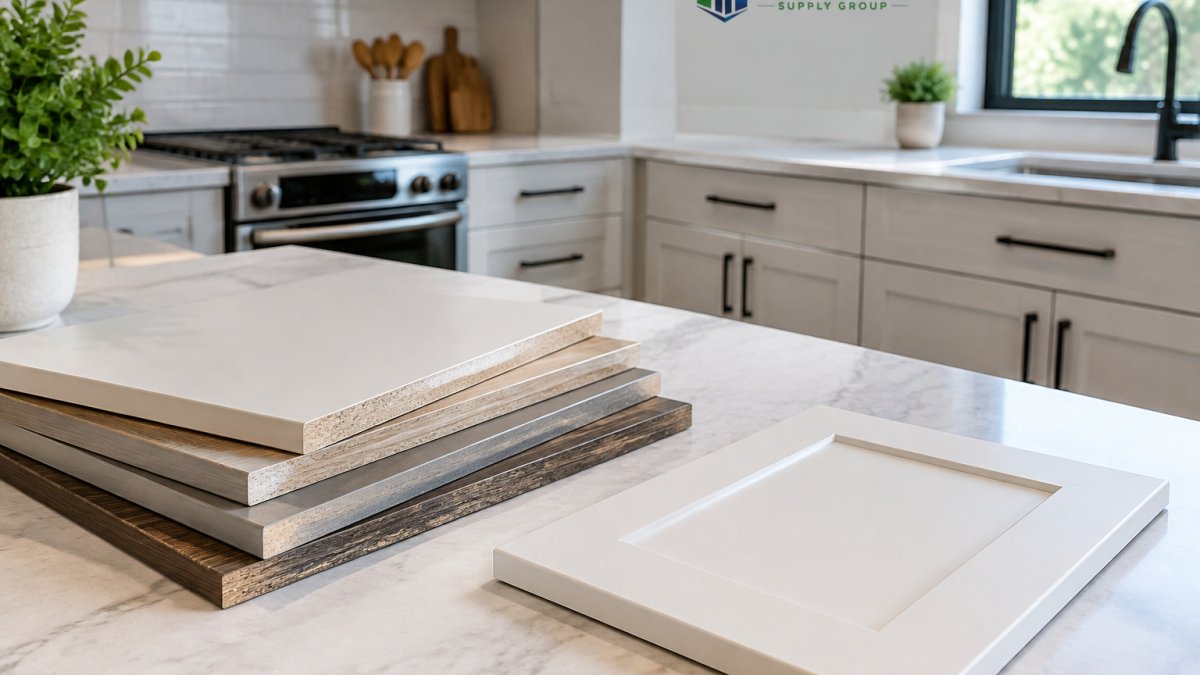
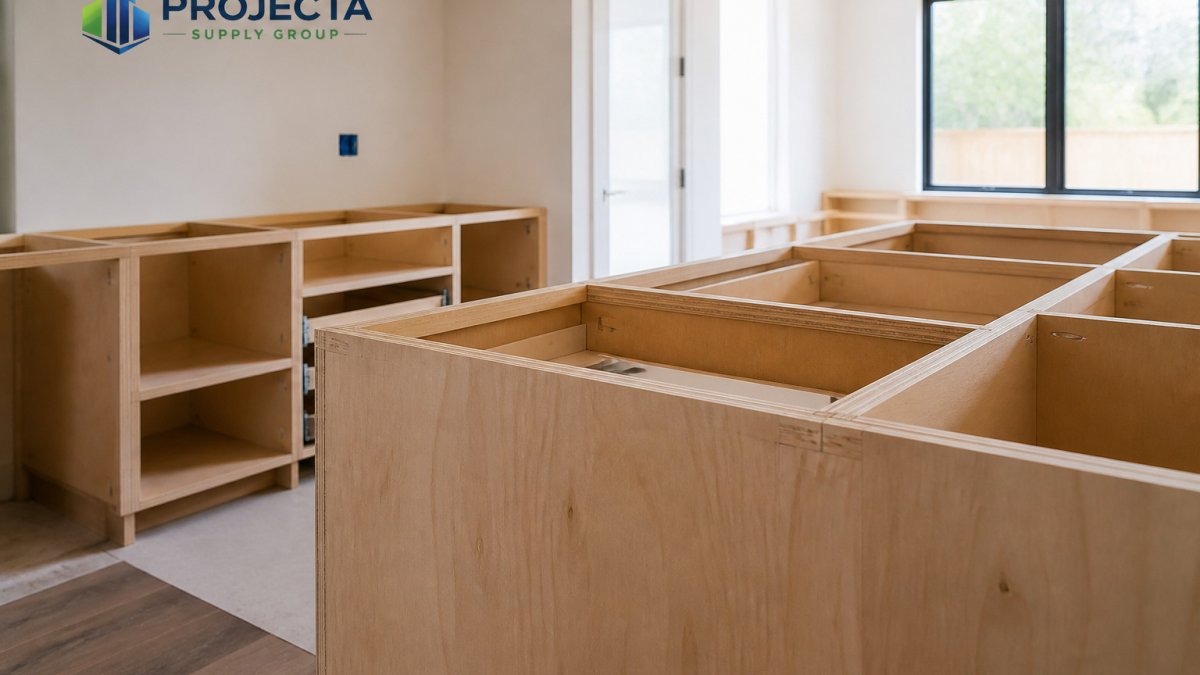
The construction detail behind those prices is worth understanding. Check the box material, joinery and drawer construction when you compare options, since two cabinets at the same price can differ considerably in lifespan.
What Affects Cabinet Pricing Beyond the Per-Foot Rate
The per-foot rate is a starting point. Several other factors move the final total, and they often add more than the rate difference between two suppliers. Readers planning larger or mixed-use project coordination can see how scale and project planning affect overall material pricing.
Door style and finish matter. A flat-panel painted door typically costs less than a raised-panel door with a glaze. Wood species matters too: maple, birch and alder are priced differently from oak or cherry, and specialty veneers add cost. Hardware, soft-close hinges and full-extension drawer slides are often charged as upgrades.
Layout complexity adds cost. Corner solutions, tall pantry units, custom-depth cabinets and a high number of drawers all increase the build time. Specialty items such as integrated appliance panels and decorative trim can be priced per piece rather than per foot.
Delivery and handling fees sit outside the cabinet price on many quotes. Ask for these in writing, along with any charges for returns or restocking. Taxes should also be stated clearly so you can compare totals on the same basis.
Kitchen Cabinet Installation Cost and What It Adds to the Budget
Installation is usually quoted separately from the cabinets themselves, and it can represent a large share of the final spend. Cabinet IQ's guide explains how installation costs are calculated and which factors push them up, and that is a useful reference when you ask a contractor for a labour quote.
Installation labour depends on the number of runs, the wall condition, whether old cabinets must be removed and whether plumbing or electrical work must be moved. Uneven walls and floors take longer to level. Removal of existing cabinets may be a separate line item, and some contractors charge for disposal.
Ask for installation and removal to be itemised. Then you can see the labour cost against the cabinet cost and judge the quote on a like-for-like basis. Permit fees, where they apply, should also appear on the quote so there are no surprises later.
Installation is usually quoted separately from the cabinets, and these are the main cost drivers to ask about:
Cost factor | Effect on quote | What to ask for |
Number of runs | Adds labour time | Itemised labour per run |
Wall condition | Uneven walls take longer to level | Note any levelling in the quote |
Old cabinet removal | May be a separate line item | Removal priced separately |
Disposal | Some contractors charge extra | Confirm whether disposal is included |
Plumbing or electrical moves | Adds trade work | Separate line item for each |
Permit fees | Apply in some jurisdictions | Shown on the quote |
Kitchen Cabinet Quote Comparison: A Checklist for Apples-to-Apples Pricing
Two quotes can look similar and still describe different products. Before you commit, it helps to weigh whether pursuing a building materials quote is worth the effort. The fix is to compare scope, not the headline rate. A per-foot figure means nothing until you know what sits inside it, so start by asking each supplier to define the rate in writing.
A linear-foot rate can cover the cabinet boxes, doors and drawer fronts only, or it can include hardware, fillers, end panels, trim, delivery and installation. Some rates assume a standard countertop-ready base; others exclude toe kicks, crown molding and scribe molding. Ask directly whether the rate covers upper and lower cabinets or base cabinets alone, and whether fillers and end panels are priced per piece or folded into the rate. Those small items add up across a full kitchen and are the most common reason two quotes with the same rate produce different totals.
Use this checklist before you decide.
Total linear footage matches your measured layout, including corner and opening handling
Cabinet category is stated (stock, semi-custom or custom)
The rate is defined: base only, upper only, or both
Fillers, end panels, toe kicks and trim are included or priced as line items
Construction is specified, including box material and joinery
Door style, finish and wood species are listed
Hardware, hinges and drawer slides are included or priced separately
Countertops, appliance panels and decorative trim are shown as line items
Delivery, handling and tax are stated
Installation and removal are quoted separately
Lead time, payment terms and warranty are written down
Compare each line, not only the total. A quote with a lower per-foot rate may leave out hardware, fillers or delivery, and those omissions can close the gap quickly. The checklist makes them visible before you commit.
Watch Out Watch for exclusions buried in the fine print. Common ones include restocking fees on returns, charges for site measurement, and a surcharge if walls are out of level. Ask for every exclusion in writing so the quote you compare is the quote you pay.
Finally, compare the warranty and the construction spec side by side. Two cabinets at the same price can differ in box material, drawer construction and finish durability, and those differences show up years later. A quote that costs slightly more but specifies a longer warranty and better joinery may be the better value. Keep your measurement sketch and this checklist with every quote so the comparison stays on the same basis from first call to final order.
Requesting a Cabinet Quote from PROJECTA Supply
PROJECTA Supply provides cabinetry, flooring, windows, doors and accessories for developers, property managers and contractors on Vancouver Island. If you are pricing a project, the PROJECTA Supply homepage is the place to start, and the browse the materials range page helps you compare product options before you request a quote.
Send your measured linear footage, your chosen cabinet category and the finish and hardware you want. Ask for each item to be itemised so you can compare it against the checklist above. Pricing depends on quantity, delivery timing and specification, so request a written quote for your project. Current prices are available on the PROJECTA Supply website.
For a closer look at how cabinet construction affects the final choice, read our buyer's guide to plywood cabinets, which covers construction and durability in more depth.
Frequently Asked Questions
How do you calculate linear footage for kitchen cabinets?
Measure each run of cabinets in a straight line along the wall, from one end of the cabinet box to the other, including base and wall units that sit in the same run. Add the lengths together and convert to feet if you measured in inches or millimetres. Count filler strips and end panels only if your quote specifies them, because suppliers differ on whether these are included in the linear-foot figure. Ask for the linear-foot total in writing so you can check it against your drawings before ordering.
Does cabinet pricing per linear foot include installation?
It depends on the supplier and the quote. A per-linear-foot price often covers only the cabinets, while installation, delivery, removal of old cabinets, and countertops may be billed separately. Read the quote line by line and confirm whether hardware, drawer slides, and finishing panels are included. A quote that states installation as a separate line item makes it easier to compare suppliers accurately.
Are custom cabinets more expensive than stock cabinets?
Generally yes. Stock cabinets are mass-produced in standard sizes and finishes, which keeps their per-linear-foot cost lower. Semi-custom cabinets offer more size and finish options at a moderate premium, and custom cabinets are built to a specific design, which raises the cost. Price differences also reflect construction, wood species, and hardware quality, so compare cabinets with similar specifications before deciding.
What should a kitchen cabinet quote include?
A complete quote should list each cabinet by type and dimension, the total linear footage, the door style and finish, the box construction, the hardware and drawer slides, and any accessories. It should also show delivery, installation, and removal as separate lines where applicable, along with any permit or disposal fees. Request the quote in Canadian dollars and confirm whether applicable taxes are included.

Comments